On Vivid Writing
Ideas on writing immersive narratives.

The word "vivid" has Latin roots and originates from the Latin word vivere (to live).
The term emerged in the 1630s, derived from French vivide, and directly from Latin vividus, meaning spirited, animated, lively, full of life.
It's also related to:
Latin: vita (life)
Ancient Greek: βίος (bios, meaning life)
The word's meaning expanded over time. By the 1660s, it was used to describe lively and fresh colours. By the 1680s, it began to describe memories. By 1853, it described imagination and interest.
Today, vivid describes bold and bright colours, intense feelings, or mental images so clear they seem almost tangible. It particularly refers to descriptions, dreams or memories that produce very clear, powerful, and detailed images in the mind.
Ways to fill your writing with life
Writing, especially fiction, is about bringing the reader into a narrative you’ve created. The more vivid, the better the experience. But what is vivid in our imaginations needs to be carefully crafted to avoid purple prose and be effective on the page. Here are some ideas I use to vivify my writing.
Idea 1: firsts
Our consciousness is based on 'firsts’. The first lemon we tasted. The first red thing we saw. The American philosopher and scientist C.S Peirce introduced the term qualia to describe these firsts. Over time, they build a continuity of consciousness and become subjective experiences of redness or sourness.
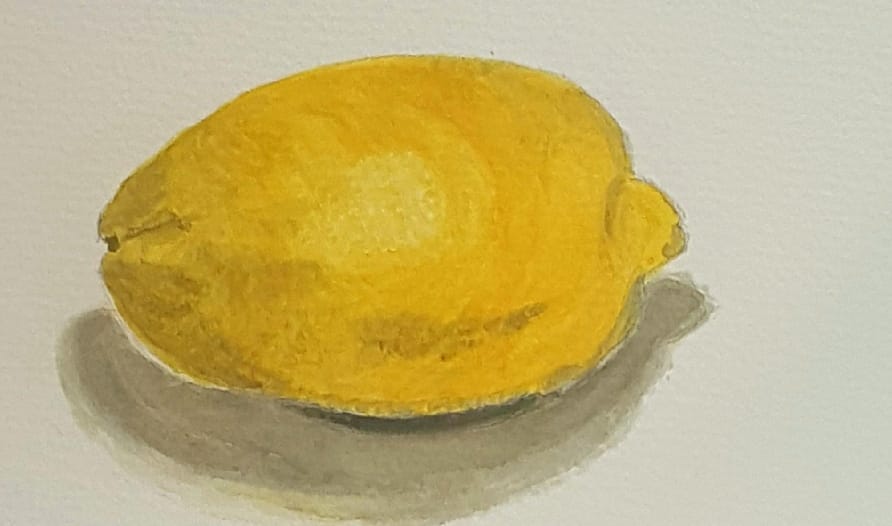
Through qualia, consciousness weaves together a feeling and knowledge of reality and existence based on the repeated experience of recognising and adding meaning to colours, sounds, and other sensations and stimuli.
I borrowed qualia in the context of creative writing, interpreting them as not only sense-data, but also:
the reader’s feeling towards their sensory perception,
the memory of the experience,
and the retrieval of those memories to build a record of reality projected from their mind onto the environment around them like a movie.
An example from one of my fiction pieces combines qualia with sensory details:
“The unbearable tenderness of white rose petals slid against her fingertips.”
Even if a reader has never touched a white rose petal, they have likely experienced fleeting moments of tenderness, making it easier to relate to the image.
Idea 2: sensory details
The reader can’t see, feel, hear, touch or sense anything moving until the writer shows them sensory details. Which sentence is more vivid?
The room was dark.
Something moved in the shadows shrouding the corners of the room.
Shadows lurked in the dark room and a cobweb brushed her cheek.
The first sentence has one sensory detail: darkness. Sentence two has more detail: movement and darkness. Sentence three has the sense of movement, darkness and touch.
For me, sentence three is the most vivid. What do you think?
Notice life like an artist
Writing vividly means observing life happening around you like an artist. Notice colours and shapes, the qualities of light and movement.
It’s vital to note these down. I’ve developed Writer’s Notebook just for that purpose. It’s a fat notebook of more than 340 blank pages separated into different narrative categories like Situation, Location and Sensory Details.
Last year, I made 325 notes such as: “Bundled up in a jacket, hood and gloves, a cyclist rides in the blowing snow, cars idling behind him.”
These notes could turn into a character or short story, making the narrative more vivid because it originated from life.
In short, vivid writing is based on the sensory details an author observes in life which connect their narrative with the reader’s consciousness.
Thank you for reading!
If you learned something from this article, please check out my writing workshops: https://sarahfenwickauthor.com/portfolio/writing-fiction-non-fiction-workshops/
Subscribe to The Vivid Pen